Aegisify Audit vs Wordfence, Sucuri, and Patchstack: Which Security Model Fits Your WordPress Site?
If you are searching for the best WordPress security plugin, a WordPress vulnerability scanner, a Wordfence alternative, a Sucuri alternative, or a serious WordPress security audit tool, the right answer depends on the security job your team needs to perform. Firewall protection, malware cleanup, vulnerability mitigation, and audit intelligence are related, but they are not the same operating model.
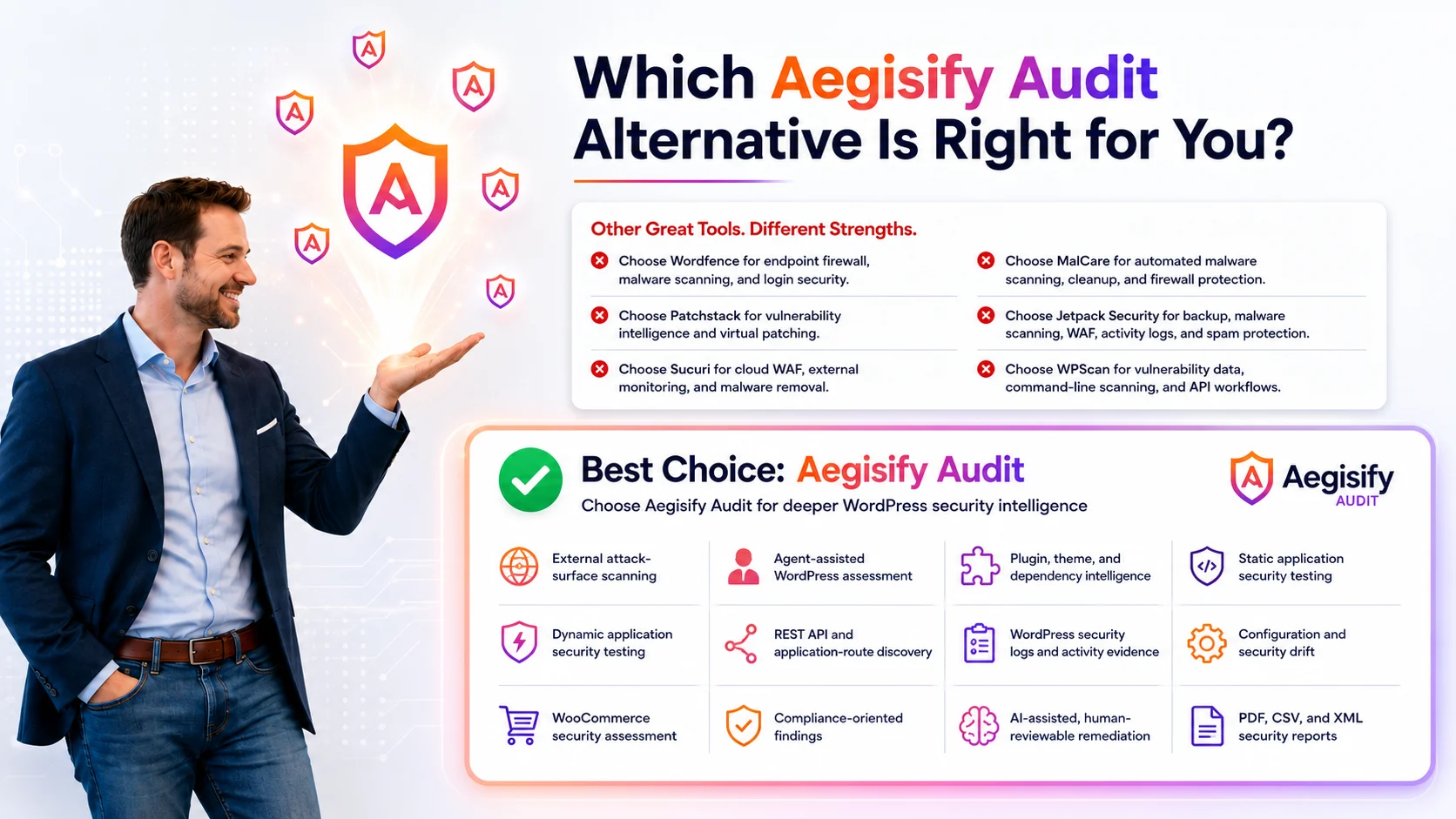
Aegisify Audit is built for teams that want verified-domain SaaS scanning, Agent-assisted evidence, code and dependency review, DAST-style testing, logs, reporting, and human-reviewable AI intelligence. It helps teams understand what matters and what should happen next.
About This Comparison
This comparison uses current public product documentation and focuses on buyer-relevant operating models. Product features, pricing, limits, response times, and packaging can change. “Securi alternative” is a common misspelling in search; the official company name is Sucuri. Buyers should verify current documentation before replacing an existing security product.
Aegisify Audit
Best aligned with teams that need verified-domain external scanning, Agent-side internal evidence, code and dependency visibility, DAST-style testing, logs, reporting, and AI-assisted prioritization.
Wordfence
Best aligned with teams that want an established WordPress endpoint firewall, malware scanner, login security, alerts, centralized management, and premium real-time rules and signatures.
Sucuri
Best aligned with teams that want a cloud-based WAF, remote monitoring, blocklist and malware checks, CDN services, and expert malware cleanup or incident assistance.
Patchstack
Best aligned with developers, agencies, hosts, and enterprises focused on vulnerability detection, vulnerability-specific protection, virtual patching, and rapid mitigation.
Why Aegisify Audit Feels Different
Many WordPress security products lead with one protection lane. Aegisify Audit leads with audit intelligence. Its verified-domain SaaS and connected WordPress Agent provide two perspectives: the public application surface and the authorized internal WordPress environment.
Externally, Aegisify can review exposure, headers, routes, APIs, authentication entry points, redirects, ecommerce surfaces, and DAST-style conditions. Internally, the Agent can provide inventory, versions, dependencies, configuration evidence, code and file signals, activity events, and optional logs.
The operational questions become: What exists? What is reachable? What changed? Which component is vulnerable? What evidence supports the finding? What should be fixed first? How will closure be verified?
| Comparison Area | Aegisify Audit | Wordfence | Sucuri | Patchstack |
|---|---|---|---|---|
| Primary Operating Model | Audit Intelligence SaaS plus Agent evidence, risk correlation, reporting, and remediation planning. |
Endpoint Security WordPress firewall, scanner, login security, alerts, and management. |
Cloud Protection Cloud WAF, monitoring, malware detection, cleanup, CDN, and support. |
Vulnerability Mitigation Vulnerability intelligence, virtual patching, and rapid mitigation. |
| Internal WordPress Visibility | Agent-assisted inventory, configuration, dependency, code, file, activity, and optional log evidence. | Strong plugin-level visibility through an endpoint security product installed in WordPress. | Primary public positioning emphasizes cloud and remote security services, with platform monitoring and cleanup. | Strong component and vulnerability visibility, software management, and mitigation workflows. |
| Runtime and Attack-Surface Review | Public external scanning, DAST-style profiles, API discovery, authenticated coverage where authorized, and commerce review. | Firewall, scanner, live traffic, login security, and endpoint-aware controls. | Cloud WAF, remote scanning, malicious-traffic filtering, blocklist monitoring, and performance services. | Protection is centered on vulnerable component exploitation and vulnerability-specific virtual patches. |
| Code and Dependency Context | Static-analysis signals and dependency review can be connected to inventory, runtime exposure, and reports. | Scanner reviews files, malware signatures, integrity, and known security conditions within its product scope. | Remote and server-side scanning plus analyst-led malware cleanup are core public themes. | Software composition, vulnerability data, and virtual-patch generation are central strengths. |
| Remediation Experience | Human-reviewable AI explanations, priorities, recommended actions, evidence, ownership, retesting, and report history. | Firewall blocking, scanning, alerts, repair tools, premium support, and higher-tier response services. | Cloud blocking, monitoring, expert cleanup, support, and post-cleanup guidance. | Virtual patches reduce exposure while teams plan software updates or replacement. |
| Best Fit | Security-conscious businesses, agencies, WooCommerce operators, engineers, and executives needing a complete audit picture. | Site owners wanting a familiar WordPress protection plugin with firewall, malware, and login controls. | Organizations prioritizing cloud WAF protection, monitoring, cleanup, and external response support. | Developers, agencies, MSPs, hosts, and enterprises prioritizing vulnerable-component protection. |
What Aegisify Audit Reviews
WordPress Inventory and Vulnerability Context
Aegisify connects WordPress core, plugins, themes, must-use plugins, custom components, and supported dependencies to versions, vulnerability intelligence, fixed releases, active status, exposure, and business impact. The goal is not a longer CVE list. The goal is a more useful remediation order.
DAST, API, and Commerce Exposure
External and application profiles can review public pages, headers, cookies, login surfaces, REST routes, AJAX behavior, API hints, exposed artifacts, and WooCommerce-related workflows. Authenticated testing should be authorized, scoped, and rate-aware.
Static Code and Configuration Signals
Agent-side analysis can surface risky code patterns, weak permissions, missing security controls, file conditions, configuration posture, and areas that require developer review. Automated findings are evidence for investigation, not proof that every issue is exploitable.
Logs, Drift, and Operational Evidence
Inventory snapshots, activity events, optional logs, timestamps, scan identifiers, configuration changes, and historical reports help teams understand what changed over time. This is especially useful for agencies, cloud administrators, and security leaders who need traceability.
AI-Assisted Prioritization
Useful WordPress security AI should reduce noise, group related findings, explain technical risk in plain language, recommend reviewable actions, and support executive reporting. It should not promise autonomous repair or replace engineering approval.
Aegisify Is Not a One-for-One Replacement for Every Security Layer
Aegisify Audit should not be presented as a direct substitute for every endpoint firewall, cloud WAF, virtual-patching service, or incident-response team. Business-critical sites may use layered products together. Aegisify’s strongest role is helping the team understand the whole WordPress security picture and decide which controls, fixes, and follow-up actions matter most.
From Security Noise to Clear Action
Aegisify’s operating model connects discovery, validation, prioritization, remediation, and verification.
Who Aegisify Audit Is Built For
WordPress Security Platform FAQ
Is Aegisify Audit the best WordPress security plugin?
There is no universal best product for every site. Aegisify Audit is not positioned as a commodity plugin; it is strongest for teams that value audit depth, Agent and SaaS evidence, reporting, prioritization, and remediation planning.
Is Aegisify Audit a Wordfence alternative?
Yes, when the buyer’s priority is broader audit intelligence, code and dependency context, DAST-style evidence, logs, and executive-ready reporting. Wordfence remains a strong choice for endpoint firewall, malware scanning, and login security.
Is Aegisify Audit a Sucuri alternative?
It can be an alternative for teams seeking deeper WordPress-side evidence and audit workflows. Sucuri remains well aligned with cloud WAF protection, remote monitoring, expert malware cleanup, blocklist support, and CDN services.
How is Aegisify different from Patchstack?
Patchstack centers its public product story on vulnerability intelligence, RapidMitigate, and virtual patching. Aegisify provides a wider audit view across exposure, code, dependencies, configuration, logs, business context, and reporting.
Can Aegisify replace a human security review?
No. It helps collect, correlate, prioritize, and report evidence so owners, agencies, developers, executives, and security reviewers can make better decisions.
Official Product References
Comparison references include Aegisify Facts and Trust Center, Aegisify Audit Scan Types, Wordfence documentation, Wordfence pricing, Sucuri Website Security, Sucuri SiteCheck, Patchstack, and Patchstack pricing and RapidMitigate details.